
In a review of organisational case studies, PwC UK found that well-being interventions were associated with reduced accident and injury rates in 16 cases. The average reduction was around 50%.


In a review of organisational case studies, PwC UK found that well-being interventions were associated with reduced accident and injury rates in 16 cases. The average reduction was around 50%.

Each year on average 90% of work related mental disorder compensation claims are attributed to mental stress.
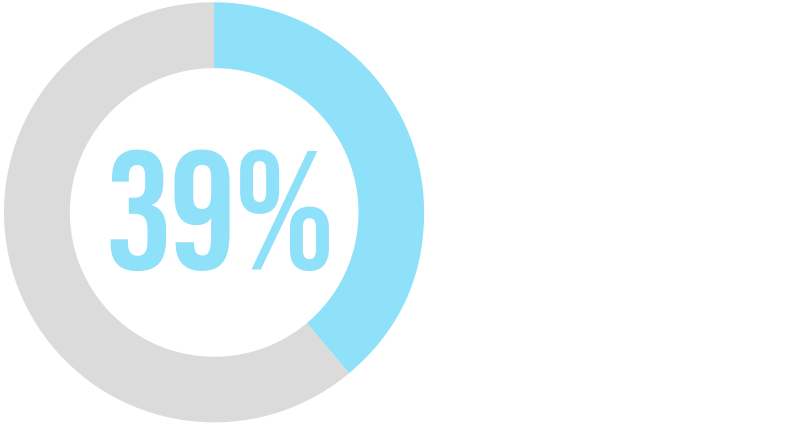
Each year on average 39% of work-related mental disorder claims are caused by harassment, bullying or exposure to violence.

Each year on average 7820 Australians are compensated for work related mental disorders.

Each year on average 6% of all Australian workers compensation claims are for mental disorders.
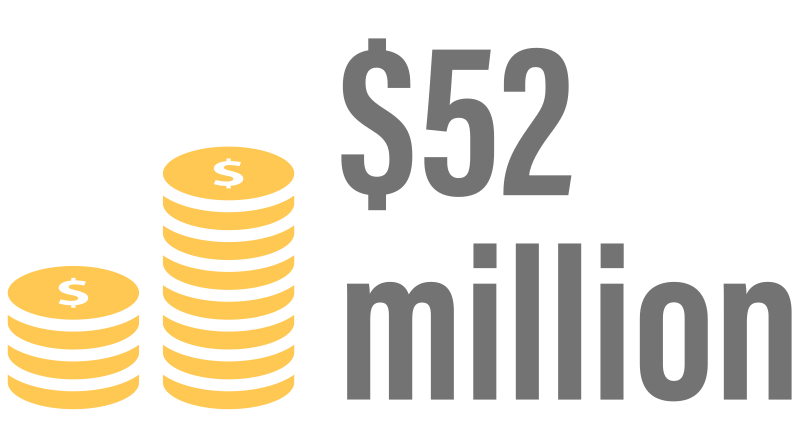
In Queensland, psychological claims resulted in $52 million worker’s compensation claim payments for 2014-15.
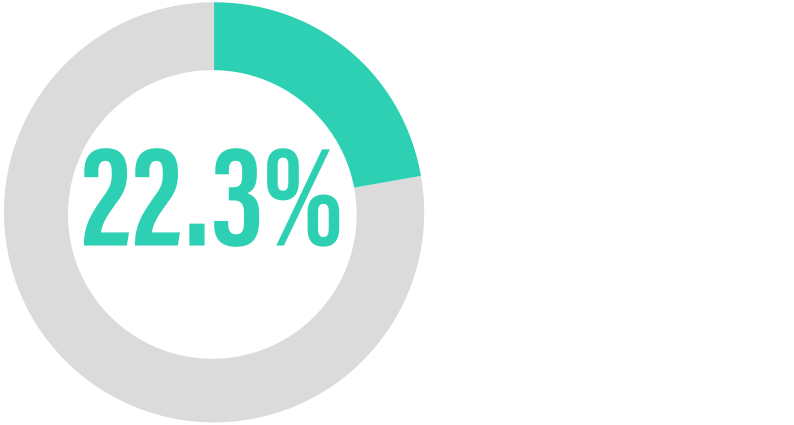
22.3% of accepted worker’s compensation claims for NSW between 2013 and 2016 were due to workplace pressure.

In NSW, 29.1% of accepted worker’s compensation claims between 2013 to 2016 were due to work related harassment and/or workplace bullying.

32% of all Australian worker’s mental disorder claims are caused by work pressure.

In Queensland, typically mental disorders result in $53,000 in claim payments and 34 weeks off work for the employee, compared to all other claims which typically result in employers paying $16,000 and 10 weeks off work for the employee.

Mental disorder claims represented 4.7% of statutory claim lodgement and 10% of all common law claim lodgement in 2014-15.

Building a mentally healthy workplace decreases workers’ compensation claims.
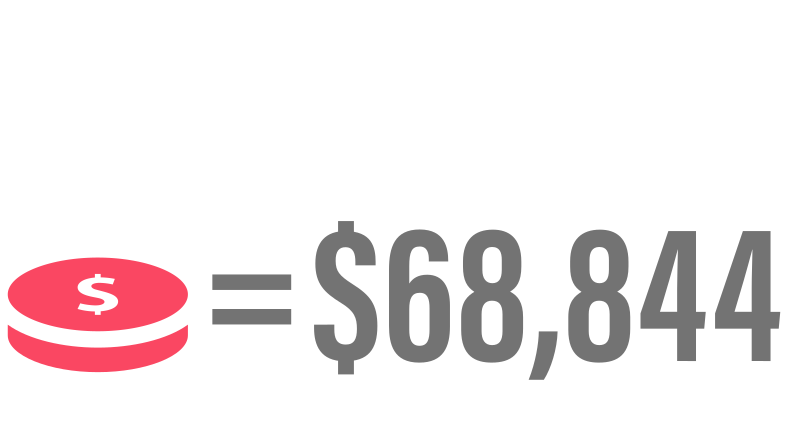
The average cost of workers compensation claims due to mental ill-health was $68,844. This includes the value of lost wages and treatment.
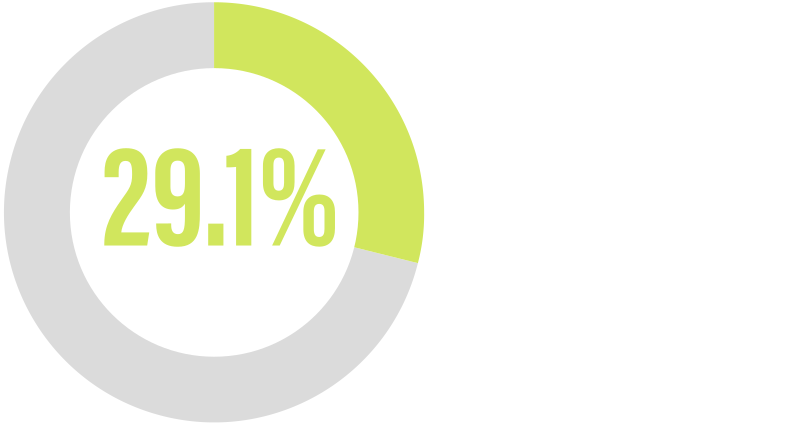
Workplace harassment or bullying precipitated 29.1% of all mental health claims in NSW.
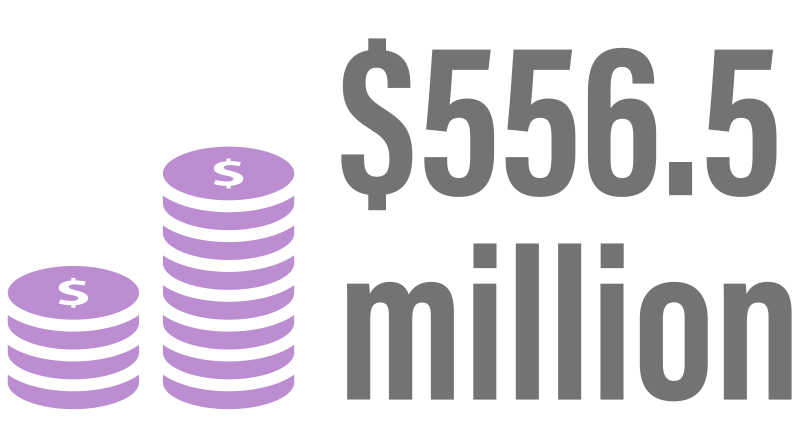
In NSW, there were 8,084 workers compensation claims for mental health issues between 2013 and 2016. The total value of these claims was $556.5 million. Of these, 40.6% were related to anxiety or stress disorders and a further 20.6% to other stressors.
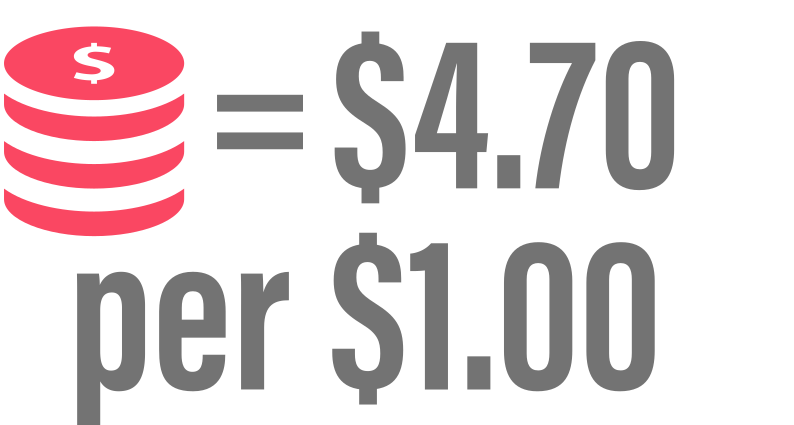
KPMG estimate that the ROI of problem-solving therapy (PST) based return to work programs is $4.70 per dollar invested.
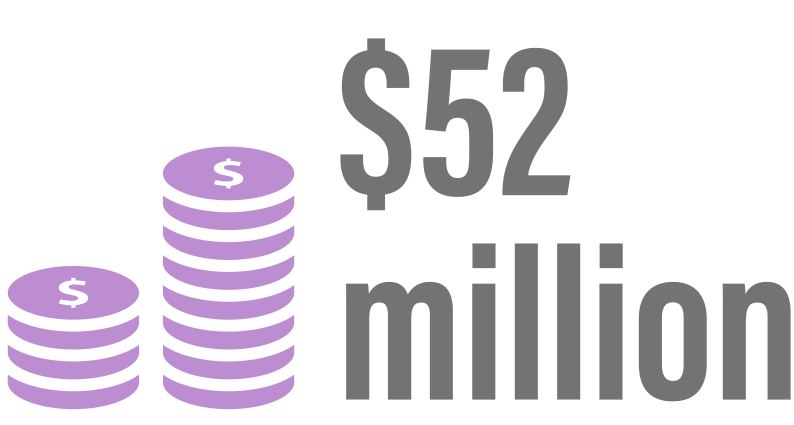
In Queensland, mental disorder claims resulted in $52 million of the total worker’s compensation claim payments for 2015-16.

Costs associated with not addressing psychological health and safety in the workplace can include costs and time related to: stress-related illnesses, absenteeism, presenteeism, turnover, short- and long-term disability, benefit utilisation rates, workers’ compensation claims, return to work and accommodation, employee and family assistance plan use, workplace grievances, workplace conflict, health and safety infractions, human rights violations, and adverse events.
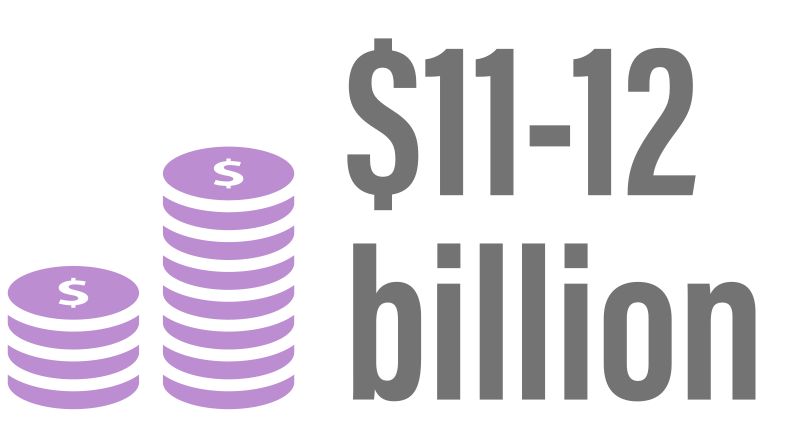
Economic analyses consistently show that mental health conditions are costing Australian businesses between $11 and $12 billion each year (through absenteeism, reduced work performance, increased turnover rates, and compensation claims.
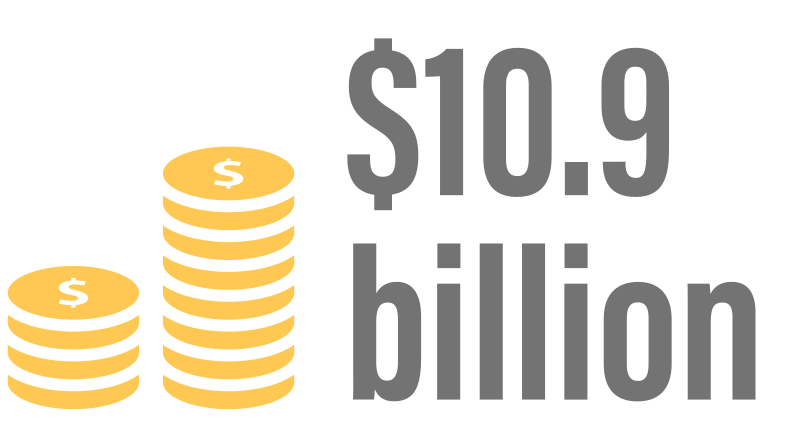
The impact of employees’ mental health conditions on productivity, participation and compensation claims has been estimated by PwC to cost Australian businesses $10.9 billion a year.
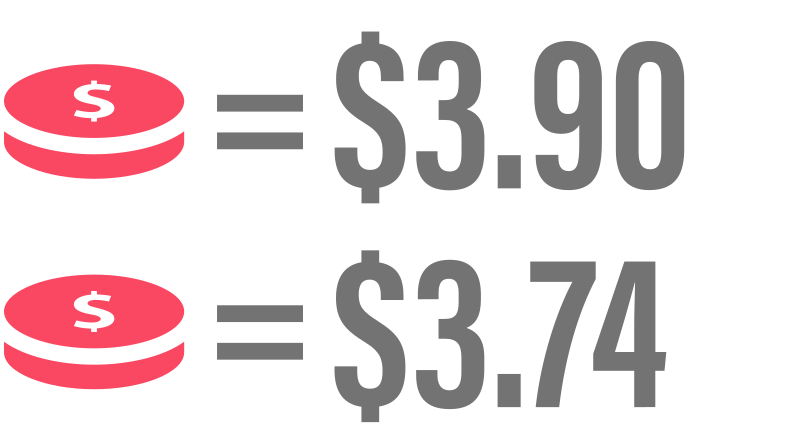
A report commissioned by SafeWork NSW has estimated that the return on investment for psychological return to work programs is $3.90 for small-medium enterprise and $3.74 for large employer per dollar invested.